


In fine mineral collecting and artisan gem cutting, true prestige is measured by geological scarcity and optical phenomena rather than commercial familiarity. While mass-market jewelry centers on standard commercial gems, elite mineral collectors and custom lapidaries look to the remote pegmatites, hydrothermal skarns, and metamorphic suture zones of Central and South Asia—particularly the mineral-rich belts of Pakistan and Afghanistan.
Among the most prized acquisitions are luminescent and ultra-rare exotic minerals—gemstones that exhibit reversible photochromism (tenebrescence), emit brilliant neon fluorescence under ultraviolet (UV) radiation, or occur in single, isolated geological deposits.
Below is an in-depth collector's guide to 10 of the rarest minerals and UV-reactive gemstones sourced directly by Folk Market Gems—with complete scientific specifications, origin data, and market valuations.
The Optical Science: Fluorescence, Phosphorescence, and Tenebrescence
Before exploring these rare species, it is essential to understand the physics behind mineral luminescence:
- Ultraviolet Fluorescence: Occurs when shortwave (254 nm) or longwave (365 nm) UV light excites electrons within trace activator ions (such as Mn²⁺, Cr³⁺, or Eu²⁺). These electrons jump to higher energy orbitals and instantly release visible light as they drop back to ground state.
- Phosphorescence: A delayed radiative release where excited electrons become temporarily trapped in lattice defects, continuing to emit a visible glow for seconds or minutes after the UV lamp is turned off.
- Tenebrescence (Reversible Photochromism): The rare property where a crystal absorbs UV radiation and alters its body color through electron-trapping color centers (F-centers), reversibly fading back to its original shade when exposed to visible light or gentle heat.
Explore Fluorescent & UV-Reactive Minerals
View our full hand-curated inventory of natural UV-fluorescent crystals and color-change gemstones direct from mine sources.
Shop Fluorescent Minerals →1. Hackmanite: The Master of Tenebrescence
- Chemical Formula: Na₈Al₆Si₆O₂₄(SO₄,S,Cl)₂
- Crystal System: Isometric
- Mohs Hardness: 5.5–6.0
- Specific Gravity: 2.15–2.40
- Refractive Index: 1.483–1.487
- UV Luminescence: Strong fire-orange to salmon-pink (LW & SW UV); pronounced purple tenebrescence
Hackmanite with tenebrescence is a rare, sulfur-bearing variety of sodalite celebrated for its remarkable optical behavior. While small deposits exist in Canada and Greenland, the world’s finest gem-quality crystal specimens originate in Badakhshan, Afghanistan, and Mogok, Myanmar.

Optical Behavior & Collecting Appeal
Under normal indoor daylight, natural Afghan hackmanite rough presents as translucent icy white, pale grayish-blue, or delicate pastel pink. When placed under a 365 nm longwave UV light, it bursts into an intense neon orange-yellow glow.
Upon turning off the UV lamp, the mineral displays dramatic tenebrescence: its body color darkens into a saturated raspberry violet or deep royal purple. When exposed to bright sunlight, the color gradually bleaches back to its original pale state.
- Folkmarket Direct Localities: Koksha Valley, Badakhshan Province, Afghanistan.
- Market Valuation: Facet-grade rough and lapidary parcels trade between $20 and $150 per gram. Clean, faceted stones with rapid color-reversal command $250 to $1,000+ per carat.
Buy Rare Hackmanite Minerals & Crystals
Explore authentic, unheated Afghan hackmanite rough crystals and UV-reactive specimens sourced directly from Koksha Valley.
Shop Hackmanite Collection →2. Rare Haüyne (Haüynite) Gemstones: Electric Royal Blue & Rare Afghan Green
- Chemical Formula: (Na,Ca)₄₋₈Al₆Si₆O₂₄(SO₄,S)₁₋₂
- Crystal System: Isometric
- Mohs Hardness: 5.5–6.0
- Specific Gravity: 2.40–2.50
- Refractive Index: 1.490–1.505
- UV Luminescence: Vivid fiery orange-red under Longwave UV
Belonging to the sodalite group and historically known as a major coloring constituent of lapis lazuli, Haüyne is prized for its electric, saturated royal blue coloration that rivals fine cobalt spinel. Historically found only as micro-crystals in Germany’s volcanic Eifel region, recent gemological discoveries in Badakhshan, Afghanistan, have yielded larger crystal parcels and an exceedingly scarce green haüyne variety confirmed by the Gemological Institute of America (GIA).

Collector Characteristics
Natural Afghan haüyne crystals exhibit distinct fiery orange fluorescence under longwave UV due to molecular sulfur centers. Because of its brittle tenacity and distinct cleavage, faceting rough without fracture requires master-level lapidary skill.
- Folkmarket Direct Localities: Sar-e-Sang & Koksha Valley, Badakhshan, Afghanistan.
- Market Valuation: Raw facet-grade parcels trade between $50 and $300 per carat. Rare eye-clean faceted stones above 0.50 carats fetch $800 to $2,500+ per carat.
Discover Rare Haüyne Gemstones
Sourced from Sar-e-Sang, browse raw facet-grade parcels and rare cobalt-blue Haüyne collector stones.
Browse Haüyne Gemstones →3. Väyrynenite: The Rose-Salmon Pegmatite Phosphate
- Chemical Formula: MnBe(PO₄)(OH,F)
- Crystal System: Monoclinic
- Mohs Hardness: 5.0
- Specific Gravity: 3.22
- Refractive Index: 1.638–1.667
- Cleavage: Perfect on {010}
First identified in Viitaniemi, Finland, in 1954, Väyrynenite was considered a non-gemological museum rarity until transparent, richly colored crystals were discovered in the granitic pegmatites of Shengus and the Shigar Valley in Gilgit-Baltistan, Pakistan.

Rarity & Visual Profile
Väyrynenite displays an unmistakable vivid rose-pink, orangey-red, or intense salmon hue caused by manganese (Mn²⁺) chromophores. It exhibits strong pleochroism, shifting from golden-orange to vibrant deep pink depending on crystal orientation. Due to perfect cleavage on {010} and limited supply, faceted stones larger than 1 carat are world-class collector gems.
- Folkmarket Direct Localities: Shengus, Roundu District, Gilgit-Baltistan, Pakistan.
- Market Valuation ( vayrynenite price per carat): Gem-quality rough ranges from $300 to $1,200 per gram. Clean faceted gems sell from $1,500 to $4,000+ per carat, with premier 1+ carat stones reaching $6,000/ct.
Inspect Väyrynenite Rare Gems & Rough
Discover ultra-rare rose-salmon pegmatite crystals and facet-grade väyrynenite parcels from Shengus, Pakistan.
View Väyrynenite Showcase →4. Sannan Skarn (Sannite) Pakistan: From The Balochistan’s Chrome-Green Discovery
- Rock Type: Hydrothermal Metasomatic Skarn Rock
- Dominant Mineral Assemblage: Chromium-Diopside, Uvarovite/Grossular Garnet, Chlorite
- Mohs Hardness: 6.0–6.5
- Specific Gravity: 3.10–3.35
- Color Agent: Chromium (Cr³⁺)
Discovered in the Muslim Bagh ophiolite belt of Balochistan, Pakistan, Sannan Skarn (commercially known as Sannite) is a rare gemological material formed by contact metamorphism between carbonate rocks and ultramafic igneous intrusions adjacent to regional chromite deposits.

Lapidary Qualities
Sannan Skarn boasts an intense, chromium-driven emerald-to-apple green body color. Under magnification, it reveals an interlocking crystalline network of green diopside, micro-garnet crystals, and fine silicate veins. Polished cabochons and carvings display a waxy-to-vitreous luster and visual toughness reminiscent of top-grade omphacite or jadeite.
- Folkmarket Direct Localities: Muslim Bagh, Qila Saifullah District, Balochistan, Pakistan.
- Market Valuation: Rough collector blocks and cutting parcels trade from $100 to $400 per kilogram; finished high-grade designer cabochons sell for $30 to $150 each.
Source Untreated Sannan Skarn Material
Shop raw lapidary blocks and polished chrome-green Sannan Skarn cabochons straight from Muslim Bagh mines.
Shop Sannan Skarn Collection →5. Petroleum-Included Quartz: Nature's Fluorescent Time Capsules
- Chemical Formula: SiO₂ with Liquid Hydrocarbon Inclusions
- Crystal System: Trigonal / Hexagonal
- Mohs Hardness: 7.0
- Specific Gravity: 2.65
- UV Luminescence: Brilliant Electric Yellow-Green & Neon Blue under Longwave UV (365 nm)
Commonly known as "Golden Petroleum Quartz" or Pakistani Herkimer-style diamonds, these water-clear, double-terminated quartz crystals from Western Pakistan contain trapped pockets of ancient liquid petroleum and methane gas bubbles.

The Phenomenon
Under normal white light, the internal oil chambers appear bright golden-yellow. When exposed to 365 nm longwave UV light, the organic aromatic hydrocarbons fluoresce with intense neon yellow-green and electric blue brilliance. Many specimens are mobile "enhydro" crystals, where gas bubbles move freely within the luminescent petroleum chamber.
- Folkmarket Direct Localities: Balochistan and South Waziristan, Pakistan.
- Market Valuation: Single collector crystals range from $25 to $150. Rare large specimens with multiple mobile fluorescent enhydro bubbles command $200 to $800+ each.
Buy Fluorescent Petroleum Quartz Crystals
Select water-clear enhydro petroleum quartz crystals with vibrant yellow-green and neon blue UV response.
Shop Petroleum Quartz →6. Rare Yellow Brucite: Balochistan’s Botryoidal Wonder
- Chemical Formula: Mg(OH)₂
- Crystal System: Trigonal
- Mohs Hardness: 2.5–3.0
- Specific Gravity: 2.38–2.40
- Color: Lemon-yellow, golden-amber, honey-orange
- Habit: Botryoidal, mammillary, and radiating fibrous aggregates
While typical brucite occurs as pale, uninspiring white masses in altered serpentinites, the 2017 discovery in Khuzdar, Balochistan, stunned the global mineralogical community with vivid, saturated lemon-yellow to golden-honey botryoidal formations.

Collector Appeal
Yellow brucite Pakistan represents the finest color expression of the species ever found. Its vibrant color is attributed to trace iron and manganese impurities in the magnesium hydroxide structure. Due to low hardness (2.5), it cannot be faceted for jewelry, making pristine, undamaged botryoidal matrix clusters highly prized centerpieces for display cabinets.
- Folkmarket Direct Localities: Khuzdar District, Balochistan, Pakistan.
- Market Valuation: Small display pieces range from $40 to $150. Large, undamaged sculptural botryoidal plates command $300 to $1,500+ depending on luster and color saturation.
Browse Botryoidal Yellow Brucite Specimens
Add electric lemon-yellow and honey-orange mineral plates from Khuzdar to your collector cabinet.
Shop Yellow Brucite Collection →7. Afghanite Gemstones: The Golden-Fluorescent Lapis Cousin
- Chemical Formula: (Na,K)₂₂Ca₁₀[Si₂₄Al₂₄O₉₆](SO₄)₆Cl₆
- Crystal System: Hexagonal
- Mohs Hardness: 5.5–6.0
- Specific Gravity: 2.55–2.65
- Refractive Index: 1.522–1.530
- UV Luminescence: Intense Neon Golden-Yellow to Bright Orange (LW & SW UV)
Discovered in 1968 in the historic lapis lazuli deposits of Sar-e-Sang, Afghanite is a complex feldspathoid mineral named after its discovery country. It occurs in skarn contacts alongside lazurite, calcite, sodalite, and golden pyrite.
Luminescence and Gem Value
In daylight, Afghanite displays an attractive sky-blue to deep cornflower hue. When exposed to ultraviolet light, it undergoes a radical transformation, glowing with a bright golden-yellow to vivid orange luminescence under both shortwave and longwave UV. Transparent crystal sections are cut into rare collector gems, while blue-and-white matrix rocks are carved into striking fluorescent cabochons.
- Folkmarket Direct Localities: Sar-e-Sang, Badakhshan Province, Afghanistan.
- Market Valuation: Raw mineral specimens and lapidary rough range from $5 to $35 per gram. Transparent faceted gemstones sell between $300 and $1,200 per carat.
Shop Rough & Cut Afghanite Gems
Sourced from Sar-e-Sang mines, explore fluorescent sky-blue afghanite crystals and faceting rough.
Browse Afghanite Minerals →8. Clinohumite: Fiery Honey-Orange Crystals from the High Mountains
- Chemical Formula: (Mg,Fe²⁺)₉(SiO₄)₄(F,OH)₂
- Crystal System: Monoclinic
- Mohs Hardness: 6.0
- Specific Gravity: 3.20–3.35
- Refractive Index: 1.631–1.668
- UV Luminescence: Moderate to Strong Yellow-Orange under Longwave UV
Part of the humite mineral group, Clinohumite is a magnesium fluorosilicate celebrated for its warm, fiery color palette ranging from apricot-orange to deep brownish-red. Formed in regionally metamorphosed dolomitic limestones, gem-quality facetable crystals are found only in two primary regions: the Pamir Mountains and Mogok, Myanmar.

Optical Characteristics
Clinohumite features high dispersion and a refractive index that gives cut stones exceptional brilliance, rivaling imperial topaz and spessartite garnet. Under longwave UV, many stones glow with a warm yellowish-orange luminescence.
- Folkmarket Direct Localities: Pamir Mountains (Tajikistan/Badakhshan border zone) and Hindukush ranges.
- Market Valuation: Rough facet parcels trade between $50 and $200 per gram. Clean faceted gems under 1 carat sell for $250 to $600/ct, while rare clean stones exceeding 2 to 3 carats fetch $1,000 to $2,500+ per carat.
Discover Rare Clinohumite & Exotic Minerals
View rare Pamir mountain clinohumite rough crystals and high-brilliance collector gemstones.
Explore Rare Gemstones Catalog →9. Ludwigite-Included Peridot: Kohistan's Needle-Bearing Gem
- Host Mineral: Forsterite Peridot (Mg₂SiO₄) | Inclusion Mineral: Ludwigite (Mg₂Fe³⁺BO₅)
- Mohs Hardness: 6.5–7.0
- Specific Gravity: 3.32–3.35
- Visual Trait: Golden-green peridot hosting black, metallic radiating needles and sprays
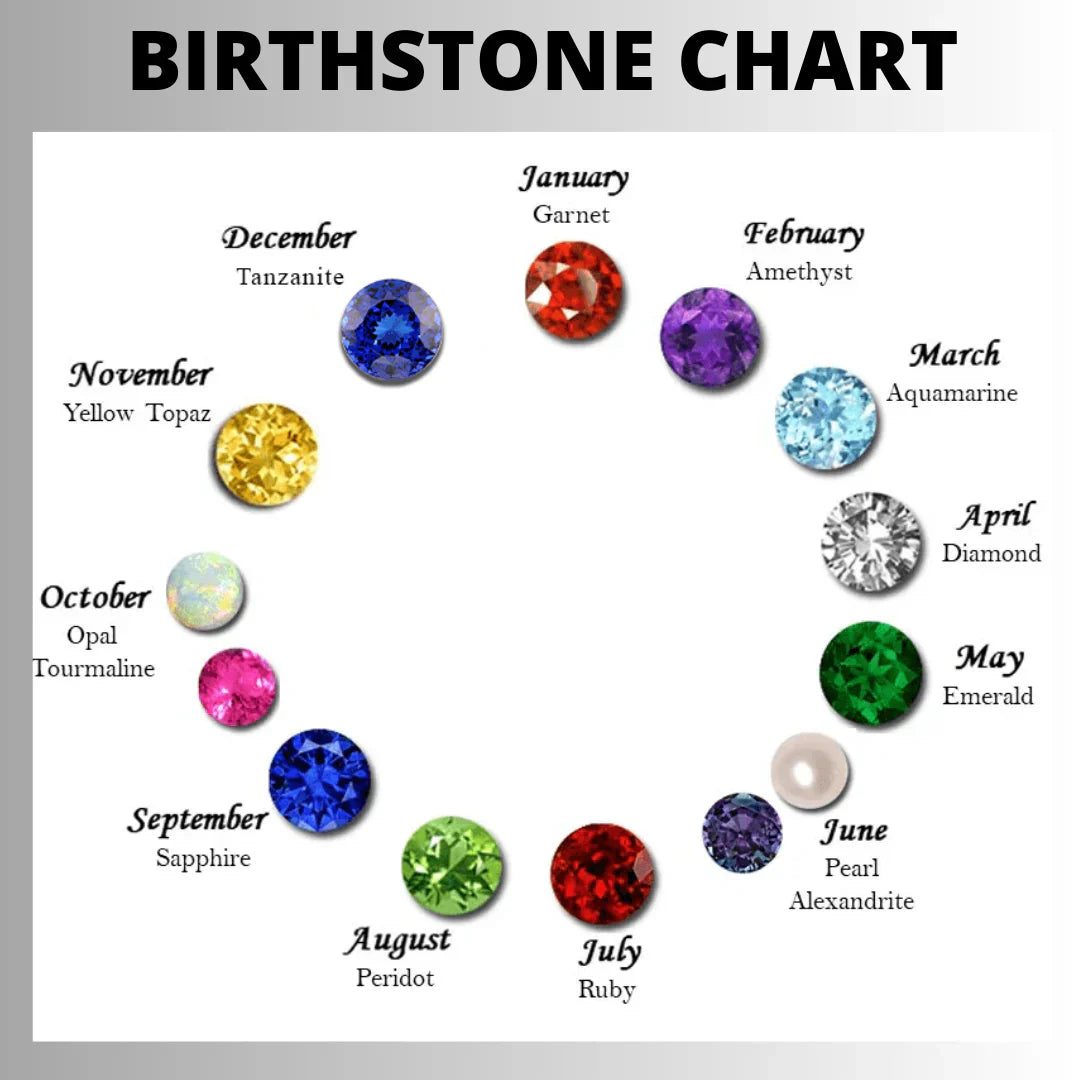
While peridot is widely known as the birthstone of August, specimens from the high-altitude Sapat mining area in Kohistan, Pakistan, offer a rare mineralogical surprise: internal sprays of black, metallic Ludwigite needles.

Mineralogical Significance
Ludwigite is a magnesium-iron borate that crystallizes as micro-fibrous, hair-like needles inside the olivine host. When viewed under magnification or cut into high-domed cabochons, these inclusions create dramatic "starburst" patterns or dark chatoyancy, transforming an ordinary green gemstone into a rare inclusion-collector masterwork.
- Folkmarket Direct Localities: Sapat Complex, Kohistan District, Khyber Pakhtunkhwa, Pakistan.
- Market Valuation: Fine crystal specimens on magnetite matrix range from $150 to $700. Custom cabochons and faceted gems with aesthetic sprays command $50 to $250 per carat.
Shop Ludwigite-Included Peridot Gems
Sourced from Sapat mine in Kohistan, select natural peridot rough and faceted stones filled with black ludwigite needles.
View Ludwigite Peridot Parcel →10. Demantoid Garnet on Matrix: Pakistan's Chrome-Green Fire
- Chemical Formula: Ca₃Fe₂(SiO₄)₃ with Chromium (Cr³⁺)
- Crystal System: Isometric
- Mohs Hardness: 6.5
- Dispersion: 0.057 (Significantly exceeds Diamond at 0.044)
- Refractive Index: 1.888
Demantoid is the rarest and most valuable variety of andradite garnet. Known historically from Russia’s Ural Mountains, fine green demantoid has also been discovered in the ultrabasic serpentinite belts of Western Pakistan (Balochistan and Khyber Pakhtunkhwa).

Gemological Brilliance
Demantoid derives its name from the archaic German word Demant ("diamond-like") due to its exceptional dispersion (0.057), which produces more chromatic fire than diamond. Pakistan demantoid crystals range from pale olive to intense chromium-green, often crystallizing as lustrous dodecahedrons on dark serpentinite matrix.
- Folkmarket Direct Localities: Muslim Bagh (Balochistan) and Dargai (Khyber Pakhtunkhwa), Pakistan.
- Market Valuation: Natural matrix specimens range from $80 to $500. Facet-grade rough trades from $100 to $400 per gram, while clean faceted gems over 1 carat sell between $500 and $2,000+ per carat.
Explore Demantoid & Natural Garnet Collections
Discover high-dispersion Pakistani demantoid garnet crystals, rough parcels, and fine loose stones.
Browse Garnets Collection →Deepen Your Gemological Knowledge
Want to learn more about mineral deposits, faceting techniques, and gemstone identification? Visit our complete research portal.
Visit Folkmarket Knowledge Hub →Master Comparison Matrix: Folk Market Gems Rare Minerals
| Mineral / Variety | Mineral Class | Hardness | Optical / Luminescence Reaction | Primary Localities | Est. Price Range (Rough vs. Cut) |
|---|---|---|---|---|---|
| Hackmanite | Sodalite Silicate | 5.5–6.0 | Tenebrescent (Darkens to Purple); Fire-Orange UV | Badakhshan, Afghanistan | Rough: $20–$150/g; Cut: $250–$1,000+/ct |
| Haüyne | Sodalite-Group Silicate | 5.5–6.0 | Fiery Orange/Red (LW UV); Rare Green Variety | Badakhshan, Afghanistan | Rough: $50–$300/ct; Cut: $800–$2,500+/ct |
| Väyrynenite | Beryllium Phosphate | 5.0 | Intense Pleochroism (Orange/Pink); Red SW UV | Gilgit-Baltistan, Pakistan | Rough: $300–$1,200/g; Cut: $1,500–$4,000+/ct |
| Sannan Skarn | Metasomatic Skarn Rock | 6.0–6.5 | Chromium Emerald-Green Body; Dense Silicates | Muslim Bagh, Pakistan | Rough: $100–$400/kg; Cabochons: $30–$150/pc |
| Petroleum Quartz | Hydrocarbon in Quartz | 7.0 | Electric Yellow-Green & Neon Blue (LW UV) | Balochistan, Pakistan | Single Crystals: $25–$150; Enhydro: $200–$800 |
| Yellow Brucite | Magnesium Hydroxide | 2.5–3.0 | Saturated Lemon-to-Honey Botryoidal Habit | Khuzdar, Pakistan | Specimens: $40–$1,500+ depending on size |
| Afghanite | Feldspathoid Silicate | 5.5–6.0 | Brilliant Golden-Yellow & Orange (LW/SW UV) | Badakhshan, Afghanistan | Rough: $5–$35/g; Cut: $300–$1,200/ct |
| Clinohumite | Magnesium Fluorosilicate | 6.0 | Warm Yellow-Orange (LW UV); High Brilliance | Pamir / Hindukush | Rough: $50–$200/g; Cut: $250–$2,500+/ct |
| Ludwigite Peridot | Borate in Olivine Host | 6.5–7.0 | Radiating Black Metallic Needle Inclusions | Kohistan, Pakistan | Specimens: $150–$700; Cut: $50–$250/ct |
| Demantoid Garnet | Andradite Garnet | 6.5 | Diamond-like Dispersion (0.057); Cr-Green | Balochistan / KP, Pakistan | Rough: $100–$400/g; Cut: $500–$2,000+/ct |
Practical Lapidary & Collector Storage Advice
If you cut or collect these exotic minerals, follow these specialized handling rules:
- Protect Photochromic Gems from Thermal Shock: Tenebrescent hackmanite responds to ultraviolet excitation, but heat reverses the color change rapidly. Avoid excessive heat during dop-wax transfer, ultrasonic cleaning, or direct halogen display lighting.
- Handle Low-Hardness Crystals with Care: Species like haüyne, afghanite, and väyrynenite sit below 6.5 on the Mohs scale and possess distinct cleavage planes. Use light pressure, high-grit diamond laps (1,200 to 3,000 grit pre-polish), and polish with cerium or aluminum oxide on tin or zinc laps.
- Use the Right UV Equipment: To properly display and verify these minerals, invest in a dual-wave ultraviolet lamp equipped with a filtered 365 nm (Longwave) LED and a 254 nm (Shortwave) tube. Many minerals that are inert under longwave light (such as Benitoite) light up only under filtered shortwave radiation.
Source Wholesale Rough Gemstone Parcels
Are you a gem cutter or lapidary artist? Explore our wholesale facet-grade and lapidary parcels.
Shop Wholesale Rough Parcels →Frequently Asked Questions (FAQ)
What makes hackmanite change color under UV light?
Hackmanite contains sulfur vacancies within its crystal lattice (known as F-centers). Ultraviolet photons excite electrons into these traps, causing the stone to absorb green-yellow light and darken into purple (tenebrescence). Exposure to white light or gentle heat frees the trapped electrons, returning the crystal to its original pale color.
Why is Pakistani Petroleum Quartz UV-reactive?
The double-terminated quartz crystals from Pakistan contain trapped liquid hydrocarbon fractions (ancient crude oil and methane gas). The aromatic ring molecules in the petroleum absorb ultraviolet energy and fluoresce intensely in vivid neon yellow-green and electric blue hues under 365 nm longwave UV light.
What is Sannan Skarn (Sannite)?
Sannan Skarn is a dense metamorphic rock found in Muslim Bagh, Balochistan, Pakistan. Formed by contact metamorphism near chromite deposits, its rich emerald-green coloration comes from high chromium concentrations in its constituent diopside and garnet minerals.
Can rare minerals like haüyne and väyrynenite be set into daily jewelry?
Due to their moderate hardness (5.0 to 6.0) and distinct cleavage planes, haüyne and väyrynenite are best reserved for custom pendants, earrings, or protected display collections rather than everyday rings.
What causes yellow brucite from Pakistan to be so vividly colored?
Unlike typical white or gray brucite, Pakistani specimens from Khuzdar contain trace amounts of iron and manganese incorporated into their magnesium hydroxide botryoidal structure, producing radiant lemon-yellow and golden-amber colors.
Related Articles & Further Reading
Calcite Beside the Peridot: Reading a New Mineral Story from Sapat, Kohistan
An examination of subduction-related fluid history and mineral associations in Pakistan's high altitude deposits.
Are Loose Gemstones Worth Buying Online? Investor Guide
A comprehensive guide exploring investment potential, pricing factors, and smart buying decisions online.
Introduction to Peridot: The August Birthstone
Learn about olivine formation, Kohistan peridot origins, and unique internal inclusions like ludwigite needles.
About the Author
Samina Gulzar is a PGJDC-certified gemologist in Pakistan who visits mining areas to hunt gemstones and shares her field experiences with collectors and gem enthusiasts.




0 comments